
About Us
GATICO was created to join the diverse experience of the founders' decades of design, development and prototyping of advanced technologies. It brings a new type of innovation to global owners of intellectual property.
We have deep experience to secure our client's ideas and concepts within our dedicated facility, right through to being a product ready for manufacture.
GATICO is an MVP builder for global clients.
We are based in Geraldton, Western Australia.
The Team
The GATICO team is committed to supporting the local Geraldton community and establishing an advanced technology centre in this Western Australian regional city. Key to this vision is getting local talent and trainees involved - showing them techniques and machines they have never encountered before. This includes acquiring local facilities and local support, to promote the development of technology and the creation of jobs in the town and the broader region.
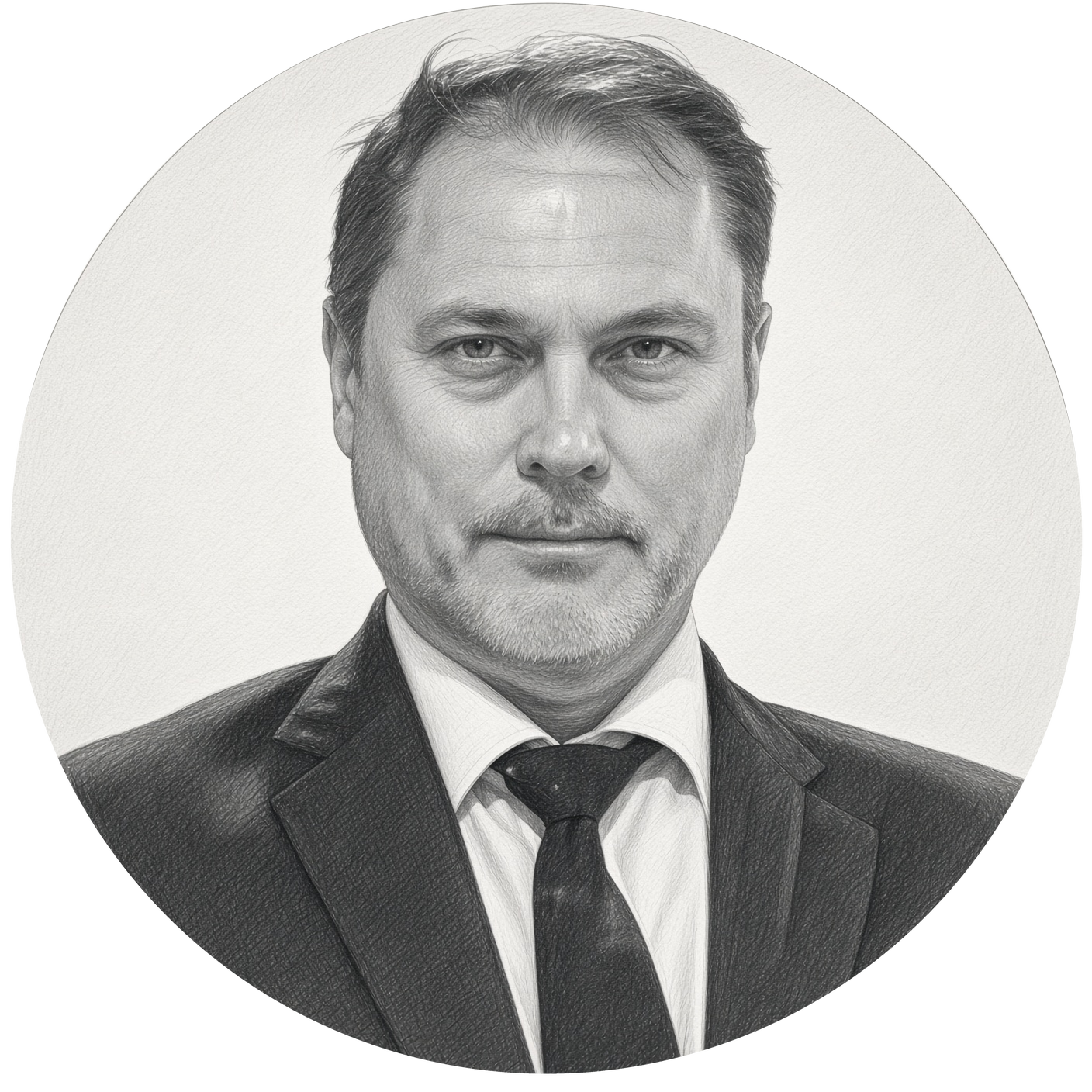
Erron Criddle
Founder, CEO and CTO
Erron brings over four decades of expertise in software engineering, enterprise architecture and applied energy technology, with deep knowledge in systems analysis, electronics and rapid prototyping.
He specialises in taking first-principles ideas through to production-ready solutions, and designed and built three successive hydrogen energy prototypes between 2008 and 2014, each advancing the understanding of efficient hydrogen production.
He also built nationally deployed enterprise software and maintained the same, including mission-critical banking infrastructure for Bankwest, previously known as the Rural and Industry R&I Bank. He also created WorkflowPoint, a maintenance, repair and operations platform in commercial production since 2014.
WorkflowPoint has been used across a national multi-branch network, including Novus Glass and RACWA, processing more than 200,000 jobs and giving him practical experience in real-time systems, telematics, uptime, inventory and end-to-end operational control.
That same systems-and-control approach is now being applied to HyGen4's onboard hydrogen generation plants, so the technology can be monitored, maintained and scaled as a working industrial asset rather than a laboratory idea.
Community
A 6th generation Australian, Erron is descended from William Criddle, who arrived from Kent in the Swan River Colony in 1829 as an indentured servant and later became a Toodyay builder, carpenter and farmer.
In 1842 William built the Toodyay Police Barracks, the first government buildings in that district, before the family settled on the Greenough Flats and in the Champion Bay country around Geraldton, where they farmed, built and kept inns.
The family line also connects to Sir David Brand, Western Australia's longest-serving Premier, through Susan Criddle, daughter of William and Elizabeth Criddle.
His father, Ian Criddle, known to everyone as 'Weenie', was born in Geraldton in 1939 and was a farmer and sportsman of unusual range, playing tennis, cricket, football, golf, darts and bowls, becoming a life member of Rovers as well as the Towns Cricket Club after about 3,500 runs and 600 wickets.
Erron continued that local sporting line, playing for Rovers until 1982, participating in state badminton trials, and playing hockey and basketball while attending Geraldton Senior High School.
He is now carrying the same Criddle pioneering instinct into clean energy, launching HyGen4 from Geraldton as a Mid West technology venture rooted in place, family and long local commitment.
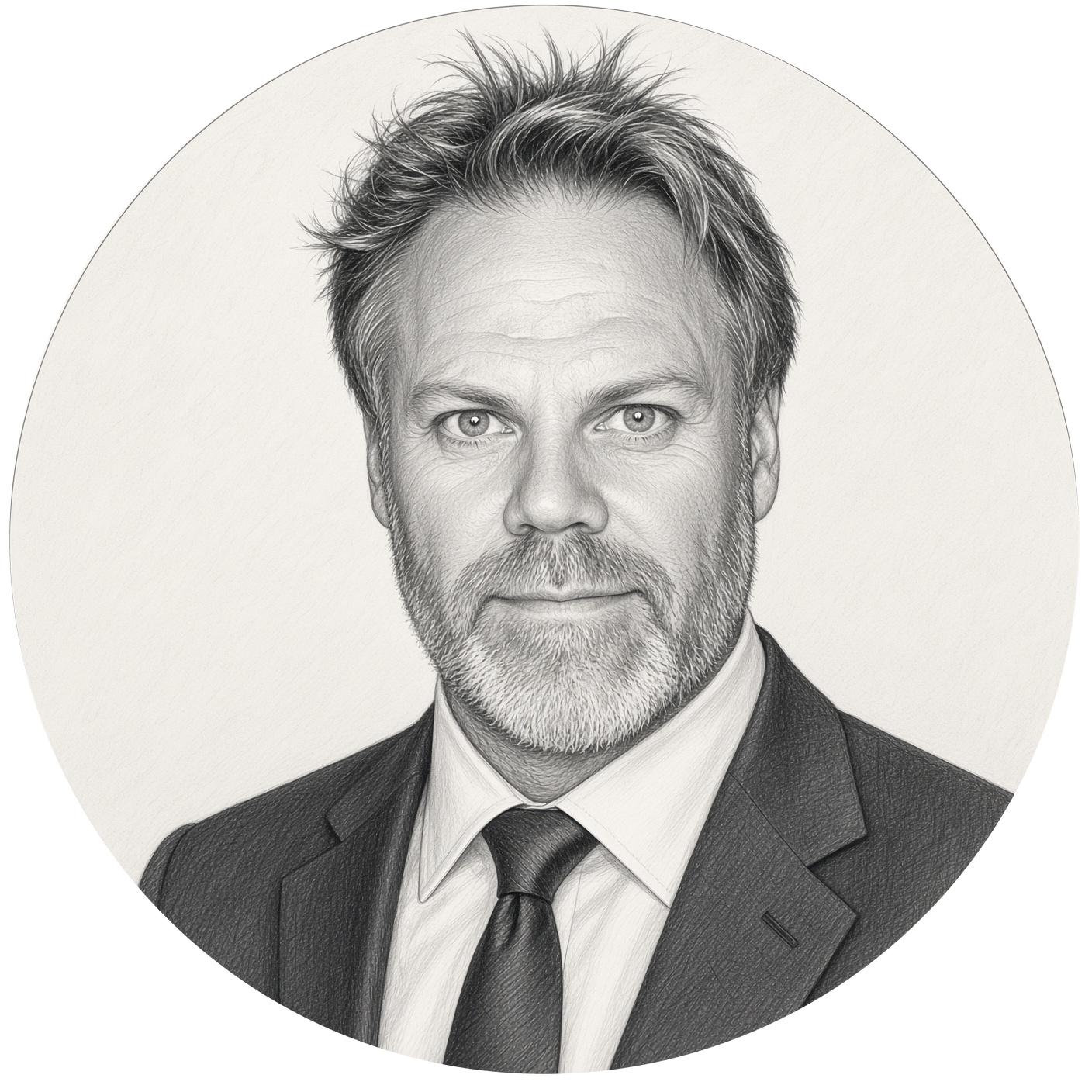
Christopher Strauss
Founder, COO and CFO
Christopher has designed, managed, built, worked on and delivered complex mission critical systems and mega construction projects, with deep knowledge in mechanical and electrical engineering, refrigeration, and specialisation in energy flow, power, heat and cooling.
With a trade in refrigeration fitting with an electrical license, and tertiary qualifications, he has operated his own mechanical and electrical business since 1986, and has led strategy, planning, delivery, commissioning and recovery on remote, live and high value infrastructure and mine sites.
He has applied principles of psychrometrics, pressure enthalpy, thermodynamics and fluid mechanics, with expertise in complex mechanical, electrical and controls, motors, fans, pumps, hydraulics, fire, security, data and life safety & escape systems, to design and deliver building services and industrial systems, ventilation, cooling, water, and major construction projects.
Leveraging technical expertise against systemic problems, he engineered solutions to minimise ozone layer depletion, stop cooling tower chemicals entering waterways, build custom chillers so regional dialysis patients can stay home, and design zero water cooling for remote data centres.
In 1986 before the Montreal Protocol on Substances that Deplete the Ozone Layer was adopted in 1987 by all 197 UN member states and the European Union, he designed a single plant multiple temperature low refrigerant volume high COP system, which is now the standard 40 years later.
His project record includes upgrading large, occupied office buildings, live brownfield mine site substations, network water pump stations, installing low yield riverbed desalination and mine site water extraction systems, LNG plant logistics, inspections for commissioning and start up of NPI infrastructure, hospital and commercial tower projects, and independent system redesigns.
Community
A 6th generation Australian, Christopher is descended from Johannes Strauss and Anna Kraehe, German carpenters and builders who sailed on the Cesar Godeffroy and landed at Grafton NSW on the Clarence River in March 1856, founding a builder dynasty that included a local Alderman.
Later generations took those construction skills West to the goldfields, working on mines, shafts and batteries, getting married, raising children and living life throughout regional Western Australia, including Wiluna, Leonora, Beria and the Lancefield gold mine, as business owners, miners, syndicate partners, builders and managers, before settling in the Perth metropolitan area.
His paternal grandfather, Dideric Strauss, was a blacksmith, farrier and operated stables, and built and fixed horse drawn carriages; his grandmother Muriel operated a dry cleaners, with family ties through the Atkins, Doust and Muir lines to the South West and Wheatbelt, where families of up to 14 children were farmers and bricklayers, built businesses and community life.
His maternal grandfather, Harry Strickland, left school at 13 to ride as a jockey, then worked North as a shed hand, shearer, barman and Special Constable, later leasing hotels in Carnarvon, planting bananas on the Gascoyne, serving on the Carnarvon Road Board, and sitting in the Legislative Council as Minister for the North West, Supply, Shipping and Railways.
His father, Ray Strauss, played cricket and hockey for Western Australia and Australia, and spent more than forty years as a Public Works Department architect on schools and hospitals across the State, his mother Maureen, cousin of Shirley Strickland, helped develop WA sport and Gymnastics WA over many years (life member), and served as a local town councillor and Deputy Mayor.
As a kid, he worked in the shearing shed on his Aunty's farm in Kulin, worked on his Grandparent's orchard and garden in Maddington, worked on air conditioning the supermarket in Meekatharra, and has worked on a wide variety of refrigeration and air conditioning plants across the country.
Through the 1980s, Christopher continued high performance in sport at state, national and world championship level, relief lectured at TAFE from first year apprentices to advanced diploma students, created the Refrigerant Control Board proposal leading to RACIRB (state) then ARCtick (national) licensing systems, and was the founding organiser of his trade for Workskills in WA.
That same mix of a strong sense of regional community and local ability, competitive commitment to sports and activities, work in energy flow, and project delivery, is now being applied to GATICO's design and delivery of advanced technology innovation, so technologies can be built, validated, and operated as working industrial assets rather than laboratory ideas.